Wildfire Prevention & Preparedness Resources for Colorado DMOs
Colorado enters Wildfire Awareness Month this May on the heels of one of the driest winters on record, and the urgency couldn't be more timely. Wildfire prevention is everyone's responsibility, and as DMOs, you're uniquely positioned to carry that message to visitors before, during, and after their trips.
Nationally, nearly 9 out of 10 wildfires are caused by people, which means the visitors you're helping plan their trips are also part of the prevention equation.
The resources below are practical tools your team can use right now to inform your communications, sharpen your campaigns, and amplify the work you and your team are already doing.
Fire Restriction Information
One of the most important things a visitor can do before heading into Colorado's outdoors is check current fire restrictions, and one of the most valuable things your DMO can do is make sure they know where to look.
The Colorado Division of Fire Prevention and Control (DFPC) websiteis a hub for up-to-date fire ban and restriction status across the state.
Here's what's available and how to use it:
County Fire Restriction Information
DFPC maintains the following interactive statewide map where you can check current fire restriction status by county and click through directly to each county's official fire restriction page. The map can be accessed directly from this page and on the DFPC website.
Federal Land Fire Restriction Information
Fire restrictions on federal lands are set independently from county restrictions.
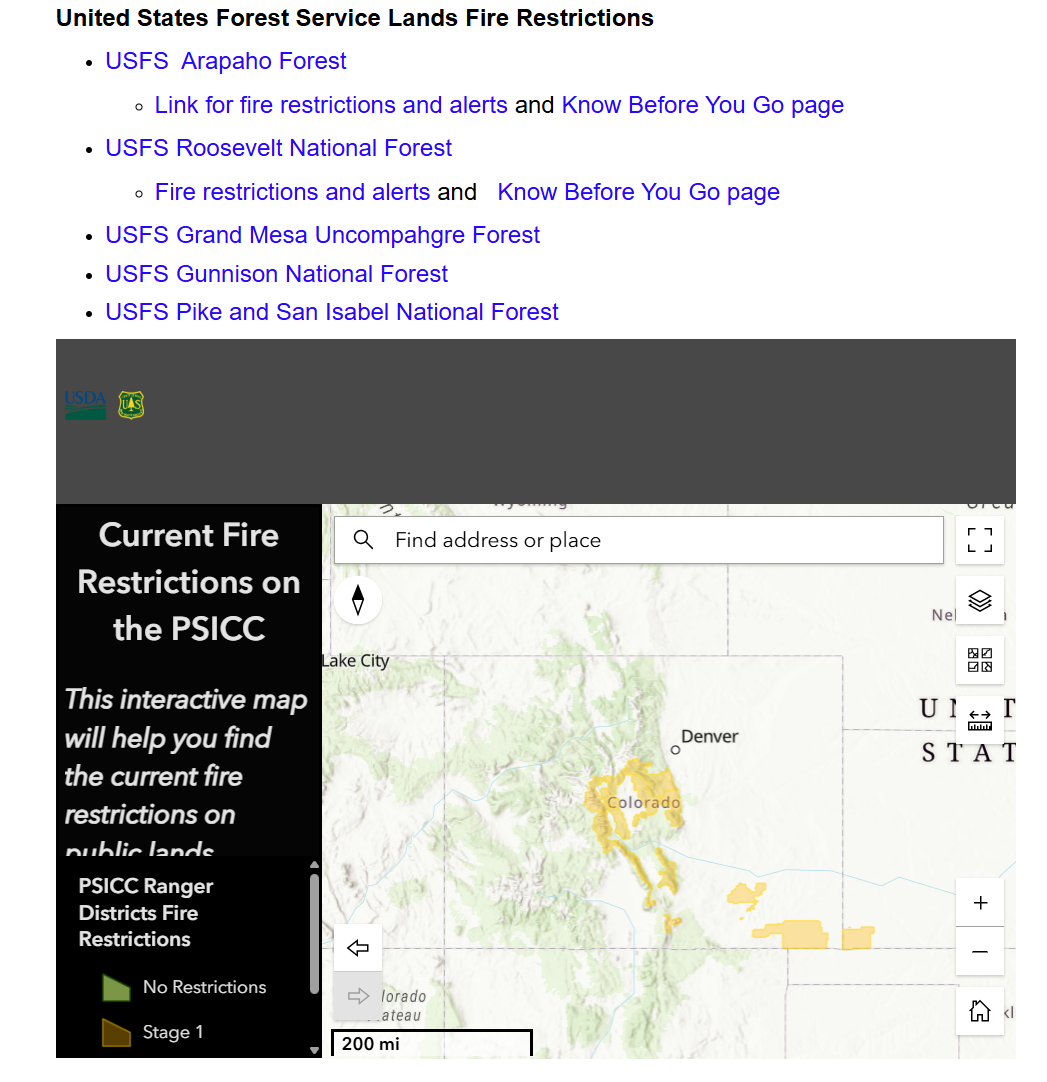
For current restriction information, go to the DFPC fire restrictions page and scroll to the bottom of the page.
This is what you’re looking for:
BLM Colorado also maintains a dedicated dashboard with current fire information and restriction status for federal lands across the state.
Wildfire Status & Conditions
DFPC offers two tools for staying current on wildfire conditions across the state, one for tracking active wildfire incidents and one for monitoring fire weather trends.
Current Wildfire Status
The DFPC Colorado Wildland Fire Status Dashboard is an interactive map that shows current wildfire incident status and fire environment conditions statewide. It's updated regularly and is the most comprehensive single view of fire conditions available to the public.
Current Fire Weather Conditions
The DFPC Weekly Fire Environment Brief provides a PDF summary of fire weather conditions, updated on a weekly basis during fire season. This is a useful tool for your communications team to monitor and reference when crafting timely visitor messaging.
Click on the “DFPC Weekly Fire Environment Brief” link on DFPC website to view the latest brief.
How DMOs Can Use These Resources
Link directly to the county fire restriction map from your website's trip planning pages, visitor guides, and outdoor recreation content, and make sure your visitor-facing staff know how to find and read it. A standing "Check Fire Restrictions Before You Go" prompt in pre-trip email communications or itinerary guides is a simple, high-impact addition.
During periods of elevated fire danger, the Weekly Fire Environment Brief gives your communications team a reliable weekly signal for when to turn up the volume on fire safety messaging across your social channels and partner communications.
For destinations that border or include federal lands — National Forests, BLM land, or National Parks — remind visitors that county and federal restrictions are set independently and that both need to be checked. Linking to the BLM Colorado dashboard and the Federal Lands section of the DFPC website alongside the county map gives visitors a complete picture before they head out.
Know Your Ignitions: Data-Driven Campaign Planning with Wildfire Risk to Communities
Not all wildfire prevention campaigns need to be generic, and the data exists to make yours specific and effective.
WildfireRisk.org is a resource developed in partnership with the USDA Forest Service that offers an interactive data visualization tool showing the types, locations, and seasonality of human-caused wildfires by county.
The tool allows you to:
Click on any Colorado county to filter data specific to your destination
Identify which ignition source (campfire, debris burning, vehicles, equipment, etc.) is most common in your area
See which months see the highest concentration of human-caused ignitions — so you know exactly when your prevention messaging needs to be loudest
How to use this as a DMO
Understanding the types and seasonality of your primary human-caused ignition sources can help make your strategies more effective. For example, if most of your human-caused ignitions are from recreation during the summer, you may want to develop outreach materials for campgrounds to be posted by June, or hire a wildfire prevention specialist to visit trailheads during the summer.
For DMOs, this translates directly into smarter campaign planning. If the data shows that your county's most common ignition source is campfires and that human-caused ignitions peak in July, that's your signal to prioritize campfire safety messaging in your June communications before visitors arrive for peak season. If vehicle-related ignitions are prevalent near your destination's trailheads and forest roads, that informs where and how you communicate with visitors. The data takes the guesswork out of wildfire prevention and gives you a foundation to make the case internally for targeted, well-timed campaigns.
Campfire Alternatives to Promote
Sometimes the most powerful prevention message isn't about restriction, it's about reimagining the experience.
When fire restrictions are in place, or when conditions simply make a campfire an unnecessary risk, visitors don't have to sacrifice the magic of an evening outdoors. Below are five alternatives to a campfire that your DMO can incorporate into visitor guides, pre-trip communications, and social content — along with a downloadable image you can use across your own channels (feel free to add your own logo).
These alternatives give visitors something positive and actionable rather than just a restriction to comply with, and they're a natural extension of the responsible recreation message Colorado has been building for years.

Campfire Alternatives
Propane Fire Pit: A top choice during fire restrictions, propane fire pits offer real flames without embers or sparks. They’re portable, easy to use, and often allowed when traditional fires aren’t.
String Lights + Cozy Setup: Drape some warm string lights around your campsite or backyard, add blankets and chairs, and you’ve got instant campfire vibes.
Portable Outdoor Heater: If warmth is the goal, a portable heater gets the job done safely, especially in colder shoulder seasons.
Lantern Circle: Arrange lanterns in a circle to mimic the communal feel of a fire. Bonus: no fuel needed.
LED Campfire Lanterns: These mimic the flicker and glow of a fire. Perfect for ambiance without heat and great for families or quick setups.